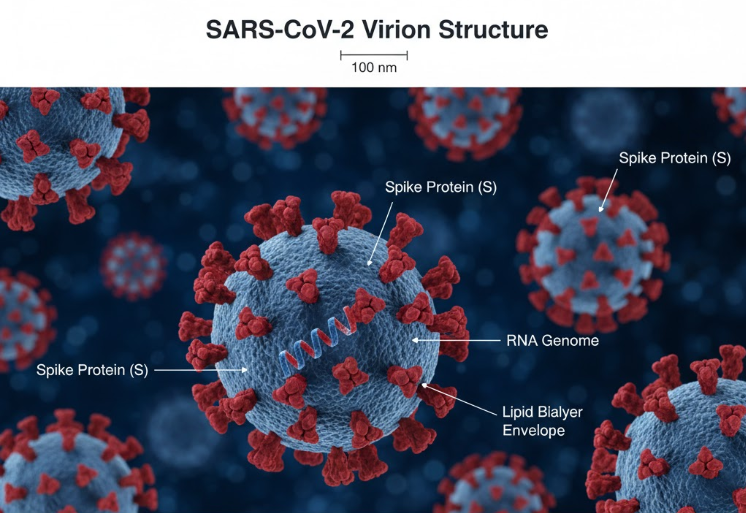
When the world first confronted COVID-19, most believed recovery meant testing negative and moving on. But for millions, the virus never fully went away. Weeks — even months — after infection, they continued to experience fatigue, shortness of breath, brain fog, and other lingering symptoms. This condition, now known as Long COVID or Post-COVID-19 Condition, has emerged as one of the most complex and lasting challenges of the pandemic era.
What Is Long COVID?

According to the World Health Organization (WHO), Long COVID refers to symptoms that:
- Develop during or after COVID-19 infection,
- Last for at least two months,
- And cannot be explained by another diagnosis.
These symptoms may appear even after mild or asymptomatic infections, affecting people of all ages — including those who never needed hospitalization.
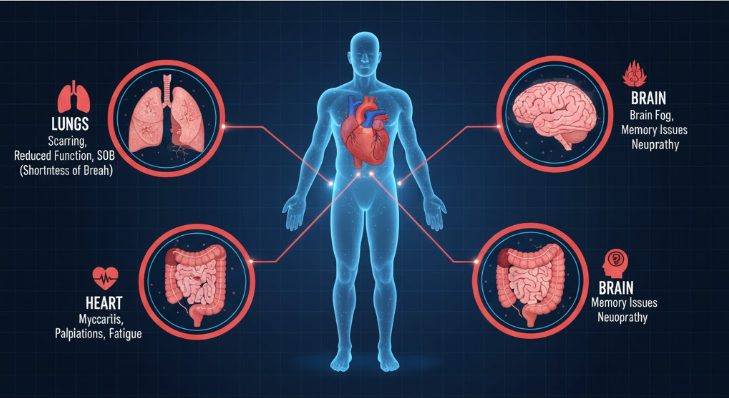
Commonly reported symptoms include:
- Persistent fatigue and weakness
- Shortness of breath and chest pain
- Brain fog, memory problems, and difficulty concentrating
- Loss of smell or taste
- Sleep disturbances and anxiety
- Joint or muscle pain
- Heart palpitations
For some, Long COVID has made returning to normal life — or even simple daily activities — an uphill battle.
The Global Impact
The scale of Long COVID is immense.
A Lancet (2022) study estimated that nearly 10–20% of COVID-19 patients developed lingering symptoms lasting longer than 12 weeks.
- In the United States, the CDC reported that by 2023, around 1 in 7 adults had experienced Long COVID symptoms at some point.
- In India, post-COVID clinics across major cities like Delhi, Mumbai, and Bengaluru began seeing thousands of patients complaining of breathlessness, fatigue, and anxiety even months after recovery.
- The UK’s Office for National Statistics (ONS) found that roughly 1.9 million people were living with Long COVID symptoms as of 2023, affecting workforce participation and mental health.
This growing burden has forced governments and healthcare systems worldwide to recognize Long COVID not just as a medical condition, but as a social and economic challenge.
Scientific Research and Understanding
Researchers are still uncovering why Long COVID happens. Current studies suggest it may result from:
- Viral persistence — small fragments of the virus staying in the body.
- Immune system overreaction — inflammation that continues after infection.
- Damage to blood vessels or organs during acute illness.
- Dysautonomia — disruption in the nervous system that controls heart rate and breathing.
Ongoing global research includes:
- The NIH RECOVER Initiative (USA) — a $1.15 billion program studying the long-term effects of COVID-19.
- The UK’s PHOSP-COVID Study, which tracks thousands of recovered patients to identify long-term physical and psychological outcomes.
- India’s ICMR Long COVID Study, analyzing recovery patterns across diverse populations and healthcare settings.
Although there’s no specific cure yet, these efforts aim to develop targeted therapies and rehabilitation methods for patients struggling with prolonged symptoms.
Recovery and Rehabilitation

Treatment for Long COVID focuses on managing symptoms and helping patients regain strength.
Hospitals have created “Post-COVID Care Clinics” offering:
- Pulmonary rehabilitation for breathing difficulties.
- Physiotherapy to rebuild stamina and muscle strength.
- Cognitive training to address memory and focus problems.
- Mental health support for depression, anxiety, and trauma.
Doctors emphasize a gradual return to activity — known as pacing — to prevent worsening fatigue. Nutrition, mindfulness, and gentle exercise like yoga or walking have also shown positive results for some patients.
In India, institutes like AIIMS and Apollo Hospitals have launched multidisciplinary Long COVID programs combining physical therapy, mental health counseling, and nutritional care.
Social and Economic Consequences
Long COVID has also affected economies by reducing productivity and increasing healthcare costs.
A Brookings Institution report (2022) estimated that up to 4 million Americans were unable to work due to Long COVID symptoms. Similar patterns have been observed in the UK, where the condition has strained social welfare systems.
For developing countries, the challenge is even greater — limited healthcare infrastructure and lack of awareness make diagnosis and treatment more difficult, leaving many sufferers without proper support.
The Road Ahead
Long COVID has taught the world a vital lesson: recovery doesn’t always mean the end of illness. Addressing it requires collaboration among governments, researchers, and communities.
Key steps forward include:
- Expanding research funding to uncover causes and treatments.
- Strengthening primary healthcare to identify and support Long COVID patients early.
- Raising awareness through public education campaigns.
- Providing social protection for those unable to work due to prolonged illness.
WHO continues to urge nations to integrate Long COVID care into national health strategies and to collect consistent data to understand its long-term impact.
Conclusion
For millions around the world, Long COVID is a daily reminder that the pandemic’s effects did not end with vaccination or negative test results. The journey toward full recovery is complex — blending science, compassion, and endurance.
But progress is being made. As research deepens and awareness grows, the world is learning not just how to treat Long COVID, but how to care for those living with it — ensuring that no survivor is left behind on the road to recovery.
Would you like me to make an SEO-friendly version of this with the focus keyword “Long COVID recovery” and structured H2/H3 subheadings for better WordPress ranking?