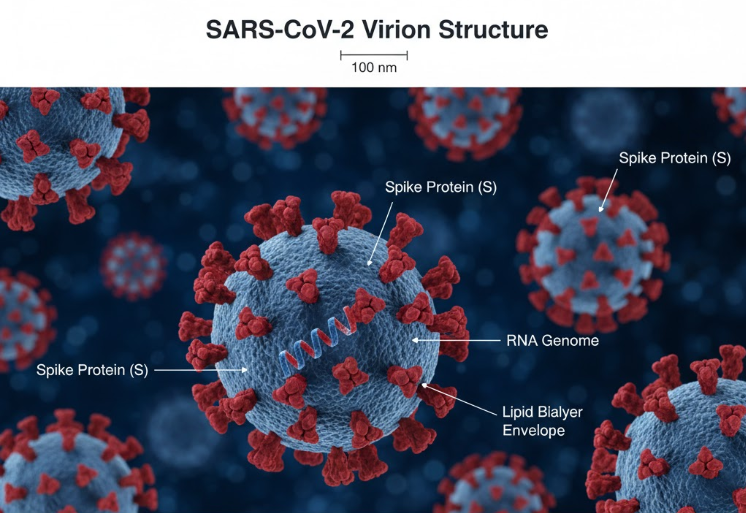
NEW DELHI, May 31, 2025 – India’s active COVID-19 caseload surged past the 3,000 mark on Saturday, according to data from the Union Health Ministry. The sharp rise in infections, which had remained at low levels for months, has put health authorities on alert, even as they stress that the severity of the new cases remains low.
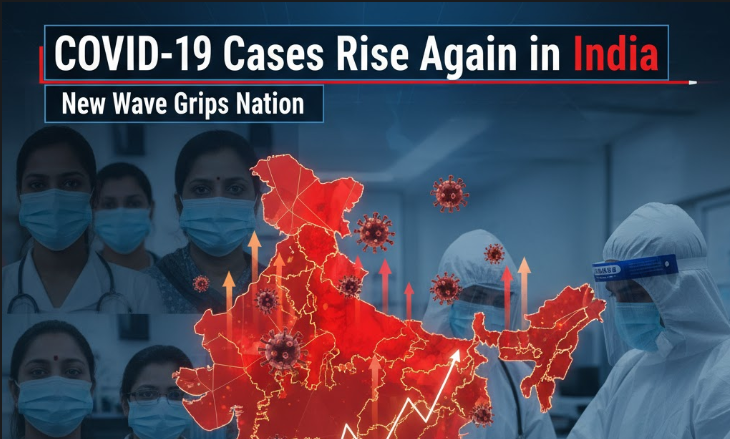
As of May 31, the total number of active coronavirus cases in the country stood at 3,395. This figure represents a significant and rapid increase from just days earlier. The national active tally was 1,010 on May 26 and was as low as 257 on May 22, indicating a more than tenfold increase in just over a week. In the 24-hour period leading up to Saturday, 685 new infections were registered nationwide.
The resurgence has not been uniform, with a few states driving the majority of the new cases. Kerala finds itself at the epicenter of this new wave, reporting the highest number of active infections with 1,336 cases. Maharashtra and Delhi, two regions that have historically been major centers for the pandemic, are seeing a significant resurgence as well. Maharashtra reported 467 active cases, while the national capital of Delhi followed closely with 375 cases.
The concern is not limited to these major hubs. The spike appears to be widespread, with states like Gujarat, Karnataka, West Bengal, and Tamil Nadu all reporting active case counts in the triple digits. Gujarat registered 265 cases, Karnataka 234, West Bengal 205, and Tamil Nadu 185. Uttar Pradesh also reported 117 active cases. According to health data experts, at least 26 states and union territories are now reporting active cases, signifying a national-level uptick rather than a few isolated outbreaks.
In addition to the rising case numbers, four new fatalities were confirmed in the last 24 hours. The deaths were reported from four different states: one each in Delhi, Kerala, Karnataka, and Uttar Pradesh.
Health experts and officials are attributing the rise in infections to the circulation of new Omicron subvariants. Genome sequencing of samples from affected regions has identified several new strains, including LF.7, NB.1.8.1, XFG, and JN.1. These strains are all descendants of the Omicron lineage, which is known for its high transmissibility.

The World Health Organization (WHO) has classified these new subvariants as “Variants Under Monitoring,” or VUMs. This designation is used when a variant has genetic changes that could make it more transmissible or better at evading immune responses, but its actual impact on public health is still unclear. While these variants are believed to be driving the spike in cases, there is currently no evidence to suggest they cause more severe disease than previous Omicron strains.
This lack of severity has been the central point in the official response from health authorities. The message from the highest levels of India’s health infrastructure, including the Indian Council of Medical Research (ICMR), has been one of cautious calm. Dr. Rajiv Bahl, the Director General of the ICMR, stated that while vigilance is crucial, there is “no reason to worry” or “no cause for alarm” at this stage.
Officials have repeatedly emphasized that the vast majority of new infections are mild in nature. Most patients are reporting flu-like symptoms and are recovering well under home care, without the need for hospitalization. This is a crucial distinction from previous waves that threatened to overwhelm the nation’s healthcare system.
The official public guidance is to “follow normal precautions.” However, a strong advisory has been issued for vulnerable populations, including the elderly and individuals with pre-existing health conditions or comorbidities. These groups are advised to take extra precautions, which may include wearing masks in crowded indoor spaces and avoiding large gatherings.
The central government has also directed states to remain on alert and review their hospital preparedness. This includes ensuring the availability of beds, medical oxygen, medicines, and other necessary supplies to handle any potential increase in hospital admissions, even if it is not expected. The situation is being closely monitored through India’s robust disease surveillance network.
The late May 2025 surge serves as a clear reminder that the COVID-19 virus has not been eliminated but has transitioned into an endemic threat. The response from officials—”monitor, be vigilant, but do not panic”—reflects this new reality of managing flare-ups as they occur. As India moves forward, the focus remains on protecting the vulnerable and managing the virus’s presence without resorting to the large-scale disruptive measures of the past.